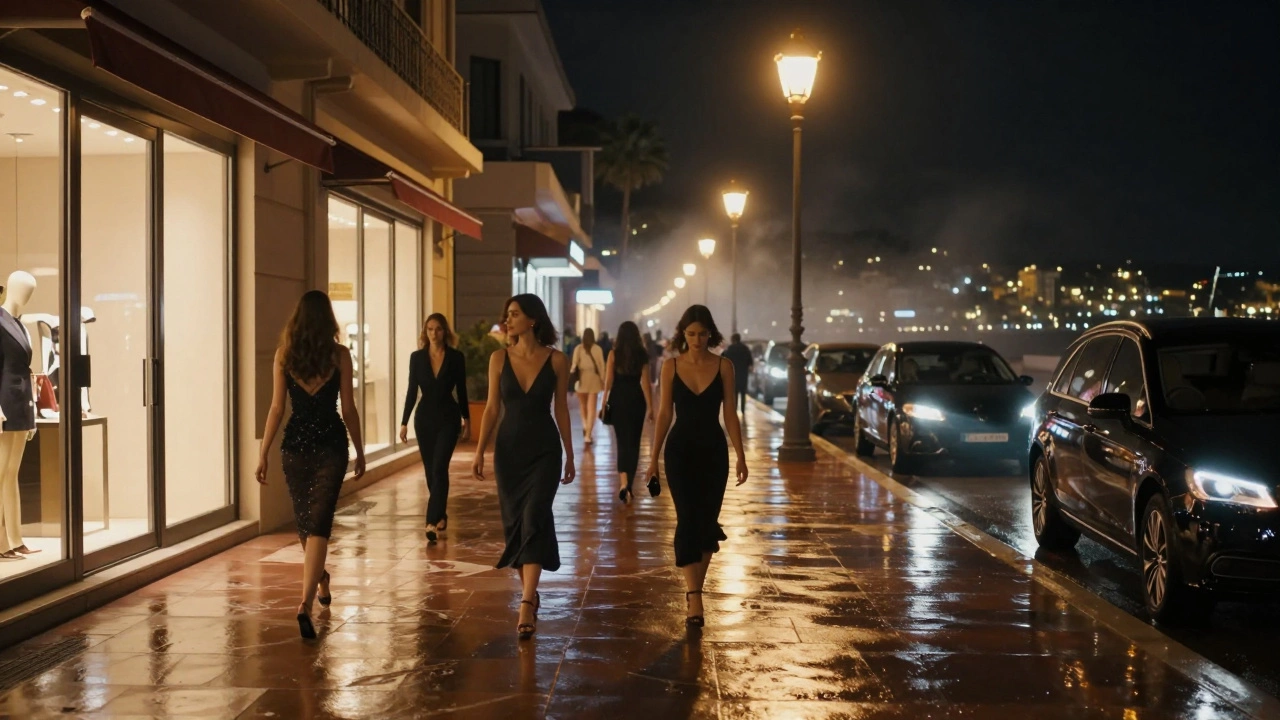
There’s something about the way the Mediterranean light falls on the Croisette after midnight that makes even the most ordinary moments feel like scenes from a film. Cannes in summer isn’t just about film premieres and red carpets-it’s where the line between public spectacle and private desire blurs. Women in sleek dresses walk past luxury boutiques, their heels clicking against marble, while shadows move just a little too fast between alleyways. This isn’t the Cannes you see in travel brochures. This is the one that lingers in whispers, in hotel lobby glances, in the quiet hum of a Rolls-Royce idling outside a private entrance.
Some people come to Cannes looking for connection. Others are searching for escape. A few, whether they admit it or not, are drawn to the kind of arrangements that exist just outside the law. You’ll hear stories-some true, most exaggerated-about women who work the nights here, not as performers, but as companions to men who can afford to pay for discretion. It’s not glamorous, not in the way movies show it. It’s exhausting, lonely, and often dangerous. And yes, it happens. Just like it does in other cities with money and anonymity. If you’re curious about how these networks operate in other places, you might find some parallels in dubai eacort, where the rules are different but the underlying dynamics aren’t.
The Real Cost of Discretion
People assume that if you’re paying for companionship in Cannes, you’re getting elegance. You’re not. You’re getting a transaction wrapped in silk and champagne. The women who work these nights don’t wear designer gowns because they’re invited to parties-they wear them because it’s part of the job description. Their schedules are dictated by flight arrivals, yacht charters, and private dinners. They don’t get weekends off. They don’t get sick days. And if they say no to a client, they lose income-and sometimes, their safety.
There’s no union. No HR department. No legal protection. In France, prostitution itself isn’t illegal, but soliciting, pimping, and operating brothels are. That means the women who work here operate in a gray zone: they can’t advertise, they can’t work in groups, and they can’t rely on police if something goes wrong. The clients? They’re often foreign businessmen, celebrities, or men with more money than sense. They don’t care about the rules. They care about being unseen.
Why Cannes? Why Not Paris or Monaco?
Cannes has a unique rhythm. It’s not a constant party like Monaco. It’s not a cultural hub like Paris. It’s seasonal. For six months of the year, it’s quiet. For two, it explodes. And during those two, the demand for private companionship spikes. The film festival brings in people who want to be seen, but not known. Men who have everything but still feel empty. Women who need rent, or a way out, or just a break from the life they were born into.
Unlike cities where escort work is more visible-like the dubai red light area, where the rules are written in neon and security cameras-Cannes keeps it hidden. No streetwalkers. No open windows. No signs. Just text messages, encrypted apps, and the occasional limo pulling up to a service entrance. The silence is part of the appeal. For everyone involved.
The Human Side Nobody Talks About
Behind every name on a private list is a real person. One woman I spoke with-on condition of anonymity-told me she moved to Cannes after her father died. She had student debt, no family support, and a degree in literature she couldn’t use. She didn’t want to be a waitress. She didn’t want to be a nanny. She wanted to be paid for her presence, not her labor. So she became a companion. She reads poetry to her clients. She listens to their divorces. She remembers their birthdays. And every time she leaves a hotel room, she takes a deep breath and tells herself it’s just a job.
She’s not alone. There are others like her: former dancers, models, students, refugees. They don’t call themselves escorts. They call themselves freelancers. Independent contractors. Temporary residents of a world that doesn’t want to see them.
The Risks Are Real
There’s no safety net. If a client becomes violent, there’s no 911 call that won’t lead to questions. If they’re robbed, the police might ask why they were alone with a stranger at 3 a.m. If they get sick, they can’t go to a public hospital without risking exposure. Many rely on underground networks for medical care, legal advice, or even just a place to sleep after a bad night.
And then there’s the digital trail. Photos. Messages. Payments. Everything leaves a footprint. One woman told me she deleted 17 apps in a single week after a client threatened to release her videos. She left Cannes the next day. She didn’t say where she went.
It’s Not Just About Money
Some clients come because they’re lonely. Others because they’re addicted to control. A few because they’re just bored. But the women? They’re there because they have no other options. Or because they think they do.
There’s a myth that this work is empowering. That it’s about agency. Sometimes it is. But more often, it’s about survival. And survival doesn’t come with a contract, a pension, or a future.

What Happens After the Festival Ends?
When the crowds leave and the yachts sail away, the women who stayed behind don’t vanish. They just become quieter. Some go home. Some move to other cities. A few try to rebuild. But the stigma doesn’t disappear with the season. It follows them. In job interviews. In family gatherings. In the way strangers look at them on the street.
There’s no exit strategy written down. No government program to help them transition. No nonprofit offering therapy or housing. Just the quiet hope that next year, they won’t have to come back.
And then there are the ones who don’t leave at all. They stay. They adapt. They find new clients. New routines. New ways to stay invisible. Because sometimes, the most dangerous thing isn’t the work-it’s the life that waits outside it.
That’s why you hear stories about places like dubai prostitution-not because they’re worse, but because they’re more visible. In Dubai, the rules are clear: it’s illegal, and the penalties are harsh. In Cannes, it’s legal in theory but punished in practice. One system punishes openly. The other punishes silently.
Who Benefits From This System?
Not the women. Not the clients. Not the city.
It’s the hotels that charge extra for late checkouts. The drivers who make double fares after midnight. The security firms that turn a blind eye for cash. The app developers who profit from encrypted bookings. The photographers who sell the images to tabloids. The middlemen who take 30% and never get caught.
Everyone profits except the ones doing the work.
Is There a Way Forward?
Some activists in France are pushing for decriminalization-not of prostitution, but of the people who do it. They want safe spaces. Legal protections. Access to healthcare. Recognition as workers, not criminals.
So far, progress is slow. But change is starting. A few shelters in Marseille and Lyon now offer support to women leaving the industry. A nonprofit in Lyon helps them get ID cards, open bank accounts, and apply for jobs. It’s not much. But it’s something.
Until then, the nights in Cannes will keep going. The lights will stay on. The cars will keep arriving. And the women will keep walking through the shadows, hoping no one recognizes them.