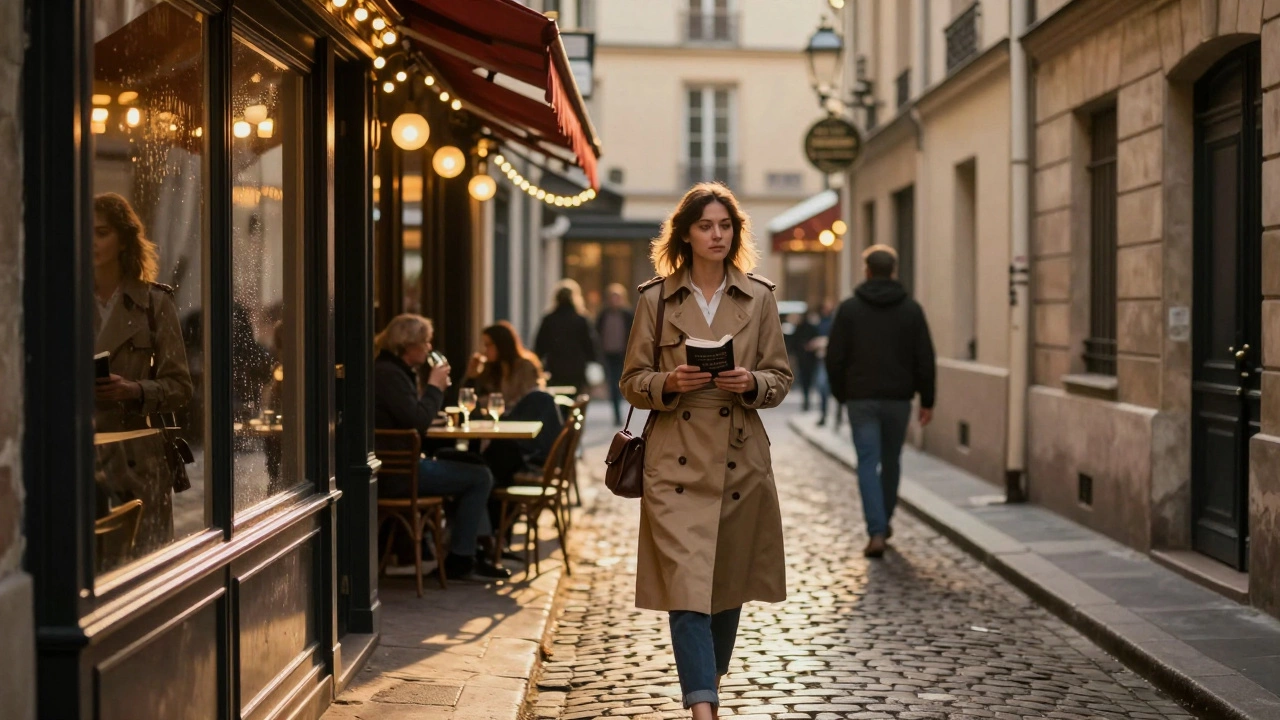
Paris doesn’t just have landmarks-it has presence. Walk through the quiet alleys of Le Marais at dusk, and you’ll notice how the city moves differently after dark. There’s a rhythm here, subtle but unmistakable, shaped by centuries of art, desire, and quiet independence. Among the cobblestones and café lights, some women move with a grace that feels like part of the city’s soul. They’re not performers. They’re not stereotypes. They’re simply people, navigating life on their own terms, often unseen by the postcards and tourist brochures. If you’ve ever wondered what it means to be an escort in Paris, don’t imagine the movies. Imagine a woman who reads Proust before bed, knows the best croissant in the 6th arrondissement, and chooses when to work-and when to vanish into the crowd. escorte patis is one of those phrases that pops up in search results, a fragment of digital noise, but it points to something real: the quiet economy of connection in a city that thrives on intimacy.
What Being an Escort in Paris Really Means
Let’s clear the air: escort work in Paris isn’t about sex. It’s about presence. It’s about being the person who listens when no one else will. It’s about knowing how to hold a conversation about the Louvre’s hidden sculptures or why the Seine smells different after rain. Many of these women are multilingual, well-read, and have degrees in art history, literature, or psychology. They don’t advertise on street corners. They don’t need to. Their reputation spreads through word of mouth, discreet referrals, and the kind of trust that takes years to build.
One woman I spoke with-let’s call her Claire-used to teach French literature at the Sorbonne. She left academia after realizing her students cared more about her personal stories than the poems she taught. Now, she spends her evenings at private dinners, gallery openings, and quiet hotel suites, offering not just companionship, but emotional intelligence. "People don’t pay for sex," she told me. "They pay for someone who doesn’t judge them for being lonely."
The Hidden Economy of Parisian Companionship
There’s no official data on how many women work as escorts in Paris, but estimates from sociologists at the University of Paris suggest between 5,000 and 8,000 individuals operate in the city’s informal network. Most are self-employed. Many use encrypted apps, not public platforms. Payment is often in cash or bank transfer, with no receipts. Contracts are verbal: a few hours, a meal, a walk through Luxembourg Gardens. No demands beyond mutual respect.
What’s surprising is how many of these women are not French nationals. You’ll find women from Romania, Colombia, Japan, and Canada-all drawn to Paris not for the nightlife, but for its anonymity. In a city where people are taught to value privacy, being an escort doesn’t carry the same stigma as it does elsewhere. It’s not glamorous. It’s not criminal. It’s just another way to make a living.

Why the Misconceptions Persist
Media portrays escorts as either tragic victims or seductive predators. Neither is true. Most of these women are not trafficked. They’re not desperate. They’re not hiding from the law. They’re simply choosing a path that gives them autonomy. They set their own hours. They choose their clients. They can walk away at any time.
The myth that they’re all young and beautiful? False. I’ve met escorts in their 50s and 60s who’ve been doing this for decades. One woman, now 62, started after her husband passed away. She needed income, but also purpose. She now hosts weekly tea circles for other women in similar situations. "I don’t sell my body," she says. "I sell my time. And my time is valuable."
The Role of Language and Culture
Language matters. A woman who speaks fluent English, German, and Mandarin can command higher rates-not because she’s more attractive, but because she can connect with clients from Tokyo, Berlin, or New York who feel isolated in a foreign city. Many clients are business travelers, diplomats, or expats who miss having someone who understands their culture, their humor, their silence.
That’s why phrases like es orte paris and escorte paeis show up in searches. They’re typos, sure. But they’re also signals. People are looking for authenticity, not algorithms. They want to find someone real-not a bot, not a stock photo, not a scripted profile. They want to find a woman who knows how to sip wine without making it a performance.
How Clients Really Choose
There’s no checklist. No height requirement. No age limit. What clients look for is consistency. Reliability. A sense that the person across from them isn’t pretending. One client told me he’d been seeing the same woman for four years. "She remembers my dog’s name. She knows I hate cilantro. She never asks about my job. We talk about books. That’s it."
Most escorts don’t keep photos on their profiles. They don’t use filters. They don’t need to. Their word is their brand. A single bad review can end a career. A single good one can last a decade.
The Future of Companionship in Paris
As AI chatbots get better, as dating apps get more toxic, more people are turning back to real human connection-quiet, unscripted, and unpaid by algorithms. Paris, with its deep-rooted culture of conversation and solitude, is becoming a magnet for this shift. Younger women are entering the field not out of necessity, but because they see it as a legitimate form of emotional labor.
There’s no law against it. No one’s being arrested. No one’s being shamed. The city doesn’t police it because it doesn’t need to. It’s already woven into the fabric of daily life, like the baker who knows your coffee order or the librarian who recommends the right book.
Maybe that’s why Paris feels different. Not because of its lights or its bridges-but because here, people are allowed to be human without permission.